
In the context of India's energy ties with Russia, Putin said certain "actors" dislike New Delhi's growing role in international markets in view of its close relations with Moscow and these elements are aiming to constrain India's influence for political reasons by imposing "artificial obstacles".

Chinese President Xi Jinping's upcoming visit to India for the BRICS summit is a pivotal diplomatic event poised to significantly impact bilateral ties and global cooperation amidst ongoing international instability.

Chinese President Xi Jinping is in New Delhi for the 18th BRICS Summit, where he is scheduled to hold bilateral talks with Prime Minister Narendra Modi. This visit, his first to India in nearly seven years, comes amidst efforts to normalise India-China relations following the 2020 Eastern Ladakh standoff and is expected to have significant implications for bilateral ties and BRICS cooperation.
Russia has a "special mechanism" to confront any challenge arising out of the US slapping punitive measures against India for its procurement of Russian crude oil, Russian charge d'affaires Roman Babushkin said on Wednesday.

Russian President Vladimir Putin stated that Moscow would not interfere in the "delicate" bilateral relations between India and China, expressing confidence in their ability to resolve border disputes amicably. He also discussed Russia's independent partnerships with both nations, touched upon India-Pakistan ties, and highlighted ongoing and proposed defence cooperation with India, including the BrahMos missile and a potential Su-57 fighter jet project.

India and China are in what experts call 'a cooperation-versus-competition situation'.

The Swadeshi Jagran Manch (SJM) has urged the Indian government to deny permission to Elon Musk's Starlink for commercial satellite broadband services, citing national security concerns. The RSS-affiliated organisation highlighted issues with data bypassing Indian gateways and the potential for misuse by hostile actors, advocating for indigenous solutions.

Prime Minister Narendra Modi urged Russian President Vladimir Putin to move from 'endless war to the end of war' in Ukraine, emphasising that a peaceful resolution is humanity's shared priority.

US President Donald Trump described Prime Minister Narendra Modi as 'a Great One', while Russia hailed him as the 'doyen of all Indian prime ministers' as world leaders congratulated him on becoming India's longest continuously serving elected representative at the top post.

India-US ties may be strained, but abandoning the relationship is not the answer; India must deal with Washington firmly without becoming either servile or hostile, asserts Ambassador T P Sreenivasan.
Prime Minister Narendra Modi and US President Donald Trump held a telephone conversation to review progress in bilateral ties, covering trade, defence, and energy, against the backdrop of heightened trade friction due to the 'Lindsey O. Graham Sanctioning Russia and Iran Act of 2026'.

External Affairs Minister S Jaishankar met US Secretary of State Marco Rubio on the sidelines of the UN General Assembly session in New York. India raised its concerns regarding the recently signed "Lindsey O. Graham Sanctioning Russia and Iran Act of 2026," which authorises tariffs on countries buying Russian oil and gas. Both leaders also discussed bilateral relations, regional priorities, and the situations in the Gulf and Ukraine.

'In the current environment, India is effectively paying a premium for supply security and diversification.'

India significantly increased its crude oil imports from Russia and the United Arab Emirates in June, securing supplies as the Strait of Hormuz began to reopen, with Russian barrels remaining attractive due to discounts and UAE supplies offsetting earlier uncertainties.

Amidst global energy market volatility driven by the West Asia crisis, Russia has proposed increasing its crude oil and natural gas supplies to India, strengthening bilateral energy ties and aiming for USD 100 billion in annual trade by 2030.

Foreign Portfolio Investors (FPIs) have withdrawn Rs 48,056 crore from Indian equities in October, driven by elevated crude oil prices, Middle East tensions, inflation concerns, and weak corporate earnings, though selling pressure moderated towards the end of the month.

Finance Minister Nirmala Sitharaman announced that India is set to introduce a new, more investor-friendly bilateral investment treaty (BIT) framework, which is expected to receive Cabinet approval shortly, aiming to provide sharper protection for investors from both sides.

China has strongly rejected a US bill that would impose tariffs on countries, including India, for purchasing Russian oil and gas. Beijing views the "Lindsey O Graham Sanctioning Russia and Iran Act 2026" as an act of "long-arm jurisdiction" and interference in its sovereign trade relations, asserting that its economic cooperation with other nations is based on equality and mutual benefit.

Former Bangladesh Prime Minister Sheikh Hasina has strongly criticised Prime Minister Tarique Rahman's decision to skip the BRICS summit in India, calling it "immature" and detrimental to Bangladesh's national interest. She argued that the absence lost opportunities for economic development and that foreign policy should not be driven by personal considerations. Hasina also highlighted the current "grave national crisis" in Bangladesh and her intention to return to restore democracy.

US Secretary of State Marco Rubio, during his visit to Mumbai, affirmed that the US policy on weapons aid and intelligence sharing for Ukraine remains unchanged. He stated that President Donald Trump is "frustrated and angry" over false accusations of deliberately harming Ukraine and is keen on a negotiated end to the conflict. Rubio also addressed concerns about missile interceptor supplies and intelligence sharing regarding recent air strikes, attributing any issues to technical matters rather than deliberate denial. He highlighted global concerns over fuel shortages and the risk of escalation, stressing the urgent need to end the war.

The challenge for India lies in navigating complex landscape to its best advantage. The BRICS Summit will test its navigation skills, asserts former foreign secretary Shyam Saran.

'The Chinese military cannot advance much in Ladakh, even if they want to.' 'Similarly, in Arunachal Pradesh, they can rename a village or two, intrude here or there, but cannot do much more realistically.'

China emphasises proper handling of differences and a long-term perspective for bilateral ties ahead of President Xi Jinping's visit to India for the BRICS summit and talks with Prime Minister Narendra Modi. The visit aims to stabilise relations following the 2020 Ladakh standoff and strengthen BRICS cooperation.

In recent years, China and Russia have pushed for de-dollarisation within BRICS, which India has resisted. One reason is that India does not want to hurt its relationship with the United States, and another is the fear of China controlling trade because the renminbi is considered the strongest currency in the bloc today.

For India, the goal is not simply to host another grand diplomatic gathering. It is to prove that a diverse coalition of emerging powers can still deliver.

It is plain to see that the US senate bill's real objective is to derail India's time-tested strategic partnership with Russia, points out Ambassador M K Bhadrakumar.

Bangladesh-China and Bangladesh-US relations have evolved from reluctant engagement to increasingly consequential strategic partnerships.

China Southern Airlines is set to resume its Guangzhou-New Delhi passenger service from September 21, ending a six-year suspension. This move is part of a broader normalisation of India-China relations, following recent high-level diplomatic meetings and previous flight resumptions by other carriers.

Russian President Vladimir Putin has offered New Delhi Russia's fifth-generation stealth aircraft Sukhoi Su-57 and even suggested that the combat jet could even be jointly produced in India in line with the strong strategic partnership between the two countries.

India's cement industry is on the brink of an oversupply situation as aggressive capacity expansion by major players is set to outpace demand growth over the next two financial years, potentially leading to pricing pressures and moderated utilisation rates.

Air Chief Marshal AP Singh has voiced concerns over significant delays in inducting new combat jets, including the Tejas aircraft, which are impacting the Indian Air Force's depleting fighter squadron strength. He stressed the need for annual induction of 36-40 jets to address the gaps and discussed ongoing procurement plans like the MRFA deal and future strategies for combat aircraft and theatre commands.

Chinese President Xi Jinping is set to visit the United States from September 23 to 25 for summit talks with US President Donald Trump, with discussions expected to cover critical economic and trade issues, including AI, and the recently signed US sanctions law targeting countries buying Russian oil and gas.
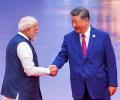
Ahead of Xi Jinping's visit, National Security Advisor Ajit Doval and Chinese Foreign Minister Wang Yi held extensive talks in Beijing on August 25 on the boundary issue and reached an eight-point consensus.
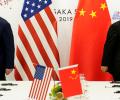
Top US and Chinese officials, including Vice Premier He Lifeng and Treasury Secretary Scott Bessent, held "candid, in-depth and constructive" talks in New York on economic and trade issues, with a specific focus on artificial intelligence. These discussions precede Chinese President Xi Jinping's anticipated visit to Washington and occur amidst new US sanctions targeting countries purchasing Russian oil and gas, and the US unveiling an "AI Force."

Asian Games gold medallist Sujeet Kalkal is focusing on improving his ground game, identified by coaches as a crucial area for his 2028 Los Angeles Olympics aspirations.

Air Chief Marshal AP Singh, Chief of Air Staff, has expressed significant concern over the inordinate delays in inducting new combat jets, including the indigenous Tejas aircraft, stating that these delays are severely impacting the Indian Air Force's depleting fighter squadron strength. He highlighted the need for 36-40 new fighter jets annually to address these gaps and voiced worry over Pakistan's collaboration with China on a fifth-generation fighter jet.

Senior Congress leader Shashi Tharoor has articulated India's position on BRICS, advocating for it to be a "non-West, but not anti-West" platform, a stance he believes is crucial for India's national interest. He highlighted the prestige of hosting the BRICS summit, India's responsibility to represent the Global South, and the significance of bilateral meetings, particularly with China and Russia. Tharoor also addressed the strained India-China relations, citing border issues and trade leverage, and discussed the challenges within BRICS, including difficulties in achieving consensus on global issues and trade imbalances, while also considering the need for diversified international relations amidst unpredictable US sanctions.

Prime Minister Narendra Modi's 76th birthday was marked by a flurry of greetings from global leaders, including Italian PM Giorgia Meloni, Israeli PM Benjamin Netanyahu, and Russian President Vladimir Putin, all underscoring strengthening bilateral ties and India's increasing stature on the world stage.

Xi brought in asymmetrical power play by stating that India should have 'strategic cognition' and 'strategic judgement made on the basis of the stage of development the two countries are at'. This is a very nuanced way of asserting China's coercive diplomatic posture and reflects Beijing's penchant to unleash border instability at will, restrict rare earth metal exports, exert pressure on India at global and regional orders, asserts China expert Srikanth Kondapalli.

United States President Donald Trump once again mounted a sharp attack on India and Russia for their close ties and said that the two countries can take their 'dead economies down together'.
